Monday, August 14, 2017

Swami Sivananda

Law Governing the Lord’s Descent
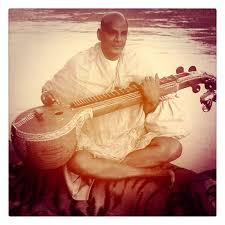
Image result for swami sivananda
The law governing the Lord’s descent upon earth is the same all times, everywhere. There is descent of God for the ascent of man
. The aim of every Avatara is to save the world from some great danger, to destroy the wicked and protect the virtuous. Says Lord Krishna: "Whenever there is decay of righteousness, then I myself come forth. For the protection of the good, for the destruction of the evil-doers, for the sake of firmly establishing righteousness, I am born from age to age".

When unrighteousness grows and righteousness is on the wane, when the forces of undivine seem to be stronger than the divine forces, when world of God or Commandments of His Messengers is forgotten or disobeyed, when religious fanaticism follows the letter of the scriptures killing their spirit, it is then that Lord incarnates Himself on earth, to save man, to save righteousness. He takes human form when He comes down on the physical plane. He is called an Avatara.

Difference Between a Jivanmukta and an Avatara

(Author's comments in italicized font- Since the jivanmukhta has a past upto the point / moment of his SELF REALIZATION,  he has left behind impressions about himself for the world around him. Hence, though, upon realization, his state of existence  ( not to confuse with his form/ siddhi/ power as equal to God) is exactly that of an incarnation or an Avatar, still, people do not follow him/ surrender to him and follow his teachings 

Due to the reason explained above), He cannot elevate a large number of people. Just as the waters of a small spring can quench the thirst of a few pilgrims only, so also, this Kevala-jnani can bring peace to a few persons only. 

Whereas, an Avatara is a mighty person. He is like a big Manasarovar lake. He removes the veil of ignorance of thousands of men and women, and takes them to the land of eternal rest, bliss and sublime.

The Avataras are one with the Supreme. They are not parts like the individual souls. Avataras or Incarnations are rays of the Lord. When the work of Loka-sangraha is over, they disappear from the world.

Kinds of Avataras

Avataras are of various kinds. There are Purna-avataras, with full Kalas or rays. There are Amsa-avataras or partial incarnations. There are Lila-avataras.

Lord Krishna was a Purna-avatara. Sri Sankaracharya was an Amsa-avatara. Matsya, Kurma, Varaha, Narasimha, Vamana, Rama and others were Lila-avataras.

Krishna and Rama were the Avataras of Lord Vishnu. 

Dakshinamurthy was an incarnation of Lord Siva. 

Dattatreya was the Avatara of the Trimurtis—Brahma, Vishnu and Siva are three aspects of God. 

Brahma is the creative aspect; Vishnu is the preservative aspect; and Siva is the destructive aspect. 

Contact with Avataras

Some people want to have contact with Avataras without being endowed with proper qualifications. Even if an Avatara appears before you, you will not be able to find Him out. You have not got the eyes to see Him as such. 

You will take Him for an ordinary man only. How many were able to detect the divinity of Lord Krishna? 

Did Jarasandha, Sisupala and Duryodhana recognise Him as the Avatara of Lord Hari? Very few people, like Bhishma, recognised Lord Krishna as the Avatara. 

That is the reason why the Lord says: "The foolish disregard Me, when clad in human semblance, ignorant of My supreme nature, the great Lord of beings".

It is only a saint who can understand a saint. Only a Jesus can understand a Jesus. How can a patient know the merits of a doctor?

A neophyte or beginner in the spiritual path should prepare himself gradually. He must get spiritual instructions from various Upa-gurus and follow them strictly. He should make himself fit to approach a Brahma-nishtha Guru. To practise meditation, and to see the Lord in meditation.

If you are endowed with the Four Means of Salvation, if you have burning Vairagya like that of Lord Buddha or Raja Bharthrihari, if you possess forgiveness and patience like the Avanti Brahmin of Ujjain, if you have devotion to the preceptor like Trotaka or Padmapada, you can contact Avataras and sages now, in this very second.

God-realisation through Worship of Avataras

You can attain God-realisation through worship of Avataras like Lord Krishna and Lord Rama. Many have already attained God-realisation in this manner. Tukaram, Ramdas, Surdas, Mira Bai and Tulasidas have seen God face to face. Their powerful writings bespeak their high spiritual attainments.


God reveals Himself to His devotees in a variety of ways. He assumes the very form which the devotee has chosen for his worship. If you worship Him as Lord Hari with four hands, He will come to you as Hari. If you adore Him as Siva He will give you Darshan as Siva. If you worship Him as Mother Durga or Kali, He will come to you as Durga or Kali. If you worship Him as Lord Rama, Lord Krishna or Lord Dattatreya, He will come to you as Rama, Krishna or Dattatreya. If you worship as Christ or Allah, He will come to you as Christ or Allah.

All are aspects of one Isvara or Lord. Under whatever name and form, it is Isvara who is adored. Worship goes to the Indweller, the Lord in the form. It is ignorance to think that one form is superior to another. All forms are one and the same. All are adoring the same Lord. The differences are only differences of names due to differences in the worshippers, but not in the object of adoration.

The real Jesus or Krishna is in your own heart. He lives there for ever. He is your Indweller. He is your partner always. There is no friend like the Indweller. Resort to Him. Take refuge in Him. Realise Him and be free.

Sunday, August 13, 2017

Sri Ramana Maharishi

Sri Ramana Maharshi  explains SAMADHI  in the following way: 

(1) Holding on to Reality is samAdhi. 
(2) Holding on to Reality with effort is savikalpa samAdhi.
(3) Merging in Reality and remaining unaware of the world is nirvikalpa samAdhi.
(4) Merging in Ignorance and remaining unaware of the world is sleep.
(5) Remaining in the primal, pure natural state without effort is sahaja nirvikalpa samAdhi. 

(from "Talk 391") 

He further explains what He means by the difference between (3) and (5) in another talk: 

Even if one is immersed in nirvikalpa samAdhi for years together, when he emerges from it he will find himself in the environment which he is bound to have. That is the reason for the AchArya emphasising sahaja samAdhi in preference to nirvikalpa samAdhi in his excellent work vivekachUDAmaNi. One should be in spontaneous samAdhi - that is, in one's pristine state - in the midst of every environment. (Talk 54) 

and again in Talk 187, Sri Ramana explains both (3) and (5) as nirvikalpa samAdhi, but the sahaja type alone is permanent: 

In sleep the mind is alive but merged in oblivion (see (4) above). - In kevala nirvikalpa samAdhi, the mind is alive but merged in light, like a bucket with rope lowered into a well, that can be drawn out again. - In sahaja nirvikalpa samAdhi, the mind is dead , resolved into the Self, like a river discharged into the ocean - its identity lost - and which can never be re-directed from the ocean, once discharged into it.
(Talk 187) 

Thus when the disciple asks, "Is loss of body-consciousness a perquisite to the attainment of sahaja samAdhi?" Sri Ramana replies: 

What is body-consciousness? Analyse it. There must be a body and consciousness limited to it which together make up body-consciousness. These must lie in another Consciousness which is absolute and unaffected. Hold it. That is samAdhi. It exists when there is no body-consciousness because it transcends the latter, it also exists when there is the body-consciousness. So it is always there. What does it matter whether body-consciousness is lost or retained? When lost it is internal samAdhi: when retained, it is external samAdhi. That is all. A person must remain in any of the six samAdhi-s so that sahaja samAdhi may be easy for him.
(Talk 406) 


Below, Sri Ramana refers to samAdhi, not as a state to be gained, as in some of the many different types but as our natural state. He also points out the importance of the waking state, which I believe was a query in another thread: 

Samadhi is one's natural state. It is the under-current in all the three states. This - that is, 'I' - is not in those states, but these states are in It. If we get samAdhi in our waking state that will persist in deep sleep also. The distinction between consciousness and unconsciousness belongs to the realm of mind, which is transcended by the state of the Real Self.

(Talk 136) 
By shravaNa, Knowledge dawns. That is the flame. By manana, the Knowledge is not allowed to vanish. Just as the flame is protected by a wind-screen, so the other thoughts are not allowed to overwhelm the right knowledge. By nididhyAsana, the flame is kept up to burn bright by trimming the wick. Whenever other thoughts arise, the mind is turned inward to the light of true knowledge. When this becomes natural, it is samAdhi. The enquiry "Who am I?" is the shravaNa. The ascertainment of the true import of 'I' is the manana. The practical application on each occasion is nididhyAsana. Being as 'I' is samAdhi.
(Talk 647) 
Eternal, unbroken, natural state is jnAna." 
(Talk 385)


Essence of Vedanta - Part 35

SAVIKALPA SAMADHI AND NIRVIKALPA SAMADHI

The ground floor represents the life of passion in the sense-universe. The first storey corresponds to Savikalpa Samadhi. The second storey is tantamount to Nirvikalpa Samadhi. The third storey represents the Sahajavastha or a Jivanmukta. 

The moving of a bullock cart can be compared to Savikalpa Samadhi. It stops. This is Nirvikalpa Samadhi. The bulls are detached. This is Sahajavastha. When the Yogi has reached the last perfect stage of meditation and Samadhi, the fire whereof burns surely all the residue of his actions, he at once gets Liberation (Jivanmukti) in this very life.

In Savikalpa Samadhi, there is Triputi or the triad- Dhyata (the meditator), Dhyana (meditation) and Dhyeya (object of meditation). 

In Nirvikalpa Samadhi, this Triputi vanishes (Triputirahita). Nirvikalpa means "free from all sorts of modifications and imaginations." The mind completely melts in Brahman. The happiness or bliss that you get in Savikalpa Samadhi is termed Rasasvada. 

(When ever a sadhaka shares with the author that he/ she is experiencing extreme bliss/ joy in mediation, the author asks the same question as Sri Ramana asks- " Who is the one who is experiencing Joy/ Bliss??. If it is not you, then you cannot experience it, if it is you, then transcend that identity also and then come and tell me what did you experience !!)


This is also an obstacle  for further spiritual progress. It makes you stop here. It cannot liberate you. You must further march onwards to attain the highest Nirvikalpa state wherein lies your whole freedom.

ADVANTAGES OF BHAKTI YOGA SADHANA

Devotion or Bhakti Yoga is  easy and safe. Any man can repeat the Name of God. Anyone can sing His praise. Without a mother, you cannot have a son. 

Even so, without Ananya Bhakti (one-pointed or single-minded devotion), you cannot have Jnana. When Bhakti is fully ripe, Brahma-Jnana dawns of itself, without much effort on the part of the Sadhaka.

Any Mantra is very powerful. It purifies the mind. It induces Vairagya. There is a spiritual current in all Mantras. A Mantra takes the devotee's soul first to one centre and then to another and so on, till access is gained to the goal or final region. 

Dhruva had Darshana of Lord Hari by repeating the Dvadasakshara (consisting of twelve letters) Mantra 'Om Namo Bhagavate Vasudevaya' given by Rishi Narada. 

Prahlada had Darshana of Mahavishnu by repeating the "Narayana" Mantra. 

Valmiki realised God by repeating "Mara-Mara" (which becomes Rama-Rama during the course of repetition). 

Tukaram of Maharashtra became one with Lord Krishna by chanting always "Vittala-Vittala," the name of the reputed image of Sri Krishna at Pandharpur.

CONTEMPLATION-FILLING-IDENTIFICATION

Mark the three processes that take place in the mind during meditation. These are: CONTEMPLATION, FILLING, IDENTIFICATION. This is another triplet. Remember these three word-images. Repeat them mentally while doing Sadhana. It will help you a lot really.

When the mind is withdrawn from the objects and deep reflection sets in, the objective consciousness is shut up; Savitarka Samadhi commences. 

When your meditation becomes deep, you generally operate through the subtle Karana Sarira only. 

The Karana-Sarira consciousness becomes your normal consciousness. Yogis have a normal Karana-Sarira consciousness. 

Bhaktas like Lord Gouranga, Tukaram, Tulsidas identified themselves with their Karana Sarira and had a normal Karana-Sarira consciousness. 

A Bhakta of Karana-Sarira consciousness is an occupant of Brahma Loka even when living in the fleshy tabernacle. 

He is one with Brahman or Hiranyagarbha. He has Divine Aisvarya; yet he has a thin ethereal body. 

He keeps up his individuality. A whirlpool is one with the whole mass of the water. It has a separate existence also. Similar is the case with the Bhakta who has a life with his Karana-Sarira in Isvara.

Continued.......