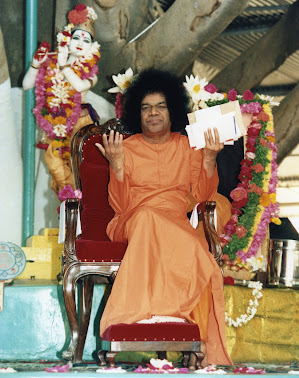
Swami writes,
Gross and subtle bodies
The body is composed of cells, which are
made up of atoms. The atoms are also physical phenomena. They are fundamentally
inert matter (jada), composite and unfeeling. The Vedanthins speak of a subtle
body, separate from this gross body. That too is physical. It is the centre of
subtle skills and force. It is in this body that all the subtle mental feelings
and agitations take place. Each force can work only through some medium or
other, which is physical.
The same power that operates the gross body works through the subtle processes of thought. They are not two different entities. One is the subtle form of the other, that is all.
What is the source of these powers? If we delve deep, we will find that there are two things in nature: space (akasa) and the life force (prana). Space is the source of all the gross and subtle material one encounters; when the life force contacts it, due to the impact the space principle transforms itself into either gross or subtle, in varying proportions.
The life force is omnipresent, like space. It can also penetrate everywhere and everything. Like the blocks of ice that water becomes and that float and move about on water, the life force acts on space and bodies appear.
The life force is the force that moulds the space into various forms. The gross body is the vehicle of the life force that it has shaped out of space. The subtle body is of the form of thought, feeling, etc.
When the subtle body is transcended, the awareness of the Reality becomes manifest. Just as fingernails persist as part of our gross body, however often we pare them, so too the subtle body is an integral part of one’s makeup.
Introspection
Just now the author finishes one line on the
next hanuman chalisa talk coming up on 8th Feb wherein, he hurriedly writes
what emerges from within. He is mentioning the essence of what came from
within which he noted down for that talk- “ One may argue that Prana or Life
force enlivens mind/senses etc. but can the life force bestow “awareness” or
“knowing “ or “feeling”?? It is the consciousness / pure awareness that lends
itself to enliven life force and through that, the mind, senses and due to this
borrowed “awareness”, mind /senses can be “aware”.
Believe him brothers and sisters, there was absolutely no plan of picking up the enxt part of SSV for writing the post today but somehow the author picks up and just read what Swami has written about the life force above and what is Swami’s last line in today’s SSV part?
“When the subtle body is transcended, the awareness of the Reality becomes manifest.”
Author swears, this is much more than a mere coincidence. Swami proves that it is He who gives the intuitive thoughts for each talk/session by giving the same thought w.r.t. to the upcoming hanuman chalisa talk and giving the same in the SSV part today.
It is overwhelming. The thought which came up related to the upcoming talk, came just 5 minutes before, he notes it down and then opens the SSV part to take up for the current post and Swami talks about the same “ life force” and then the need to transcend the life force, the subtle body, to “KNOW” the reality (Consciousness)!!
Swami has talked about Gross and subtle body in today’s post.
Let us read what the sage from Ananda Kutir writes about the three bodies, in the form of a question answer session between a disciple and his master.
"The Three Bodies & their Enumeration
(The individual experiencer is a
consciousness-centre enveloped by several layers of matter existing as the
factors causing objective awareness in it. The analysis of these layers or
bodies is necessary to ascertain the nature of the true Self.)
Hari Om. Om Sat-Guru-Paramatmane Namah.
Disciple:
How many bodies are there in an individual (Jiva)?
Guru:
There are three bodies in every individual (Jiva).
Disciple:
Please name them.
Guru:
The physical body or the gross body (Sthula Sarira), the astral body or the
subtle body (Sukshma Sarira or Lingadeha) and the causal body or the seed body
(Karanasarira) are the three bodies.

Disciple:
Please illustrate them.
Guru:
The shell of a tamarind corresponds to the physical body. The pulp represents
the subtle body. The seed corresponds to the causal body. Ice represents the
physical body. H2O represents the subtle body. The Tanmatras or root-elements
correspond to the causal body.
The Gross Body
Disciple:
What are the components of the physical body?
Guru:
The physical body is composed of five elements, viz., earth (Prithivi), water
(Apah), fire (Tejas), air (Vayu) and space (Akasa).
Disciple:
What are the seven primary essences (Sapta-Dhatus) of the physical body?
Guru:
Chyle (Rasa), blood (Asra), flesh (Mamsa), fat (Medas), bone (Asthi), marrow
(Majja) and semen (Sukla), are the seven primary essences of the physical body.
Disciple:
What are the Shad-bhava-vikaras (six modifications of the body)?
Guru:
Asti (existence), Jayate (birth), Vardhate (growth), Viparinamate (change),
Apaksheeyate (decay), Vinashyate (death), are the six modifications or changes
of the body.
Disciple:
What are the links with which the body is connected?
Guru:
The body (Deha), action (Karma), love and hate (Raga-dvesha), egoism
(Ahamkara), non-discrimination (Aviveka) and ignorance (Ajnana) are the seven
links of the chain of Samsara (world-experience). From Ajnana (ignorance),
Aviveka is born.
Aviveka
is non-discrimination between the real and the unreal. From Aviveka is born
Ahamkara or egoism; from egoism is born Raga-dvesha (like and dislike); from
Raga-dvesha Karma (action) arises; from Karma the body or the Deha is
produced.
If
you want to free yourself from the pain of birth and death, destroy ignorance
(Ajnana), the root cause of this Samsara (world-experience), through the
attainment of the Knowledge of Brahman or the Absolute.
When
ignorance is removed, all the other links will be broken by themselves. This
physical body of yours is the result of your past actions and is the seat of
your enjoyment of pleasure and pain.
Disciple:
Why is the body called Sarira or Deha?
Guru:
Because the body decays (Sheeryate) on account of old age, it is called Sarira.
Because it is cremated or burnt (Dahyate) it is called Deha.
The Subtle Body
Disciple:
What is the composition of the subtle body?
Guru:
The subtle body is composed of nineteen principles (Tattvas), viz., five Jnana
Indriyas or organs of knowledge, five Karma Indriyas or organs of action, five
Pranas or vital airs, Manas or mind, Buddhi or intellect, Chitta or the
subconscious and Ahamkara or the ego. It is a means of enjoying pleasure and
pain.

Disciple:
When will this subtle body get dissolved?
Guru:
It gets dissolved in Videha Mukti or disembodied Liberation.
The Causal Body
Disciple:
What is the causal body (Karana Sarira)?
Guru:
The beginning less ignorance that is indescribable is called the causal body.
It is the cause of the gross and the subtle bodies.

Disciple:
How can I transcend the three bodies?
Guru:
Identify yourself with the All-pervading, Eternal Atman. Stand as a witness
(Sakshi) of all experiences. Know that the Atman is always like a king -
distinct from the body, organs, vital breaths, mind, intellect, ego and
Prakriti - the Witness of their attributes.

Love.


