Sunday, March 27, 2022

Swami Sivananda


The divine within you is stronger than anything that is without you. Therefore, be not afraid of anything. Rely on your own Inner Self, the Divinity within you. Tap the source through looking within. Improve yourself. Build your character. Purify the heart. Develop the divine virtues. Eradicate evil traits. Conquer all that is base in you. Endeavor to attain all that is worthy and noble. Make the lower nature the servant of the higher through discipline, Tapas, self-restraint and meditation. This is the beginning of your freedom.


Swami Sivananda Maharaj


Tuesday, March 22, 2022

Sathya Sai Vahini - Post 27


Swami now explains the other two yoga(s)


Royal path of unitive wisdom


“Now about the royal yoga (raja-yoga). Royal yoga means the process of establishing mastery over the mind. One need not surrender one’s intellect or follow the guidelines of religious leaders. There is no chance of being misled or mistaken. At every step, one must rely on one’s own intellect and experience, as tested by oneself.


Every being has three varieties of instruments for acquiring knowledge and, through that knowledge, wisdom. The first is “instinctive”; this is very strong, active, and advanced in animals. This is the earliest, the lowest, and therefore the least beneficial of the three. The second is the “rational”, the instrument that seeks the cause and the effect thereof. This is most evident in people. The instinct can operate only in the limited field of senses and sensory experiences.


In people, instinctive knowledge is largely subordinated by the rational instruments. The limits of the rational are very thin; reason can range over vastly wider fields. In spite of this, reason is also capable only of very poor performance. Its reach is restricted; it can proceed only a certain distance; it cannot venture further. The road that logic takes is not straight. It is more circular, returning again and again to the place from which it started.


Take, for example, our knowledge of the objective world, of the elements and energies that compose it. That which urges and prompts the objective world and its components does not stop with just this much. It absorbs also that which is immanent outside the objective world. So, the extent that reason can spread over and explain is as the “consciousness” that is imprisoned in the tiny molecule as compared with the vastness and grandeur of the transcendent fullness.


To go across the boundaries of reason into the full, free realm of intuition, certain spiritual disciplines and exercises are essential. They can be grouped under the name God-propelled wisdom (jnana). For we have only three stages of wisdom: native, or derived from the senses of action and perception (sahaja-jnana); knowledge derived by the process of discrimination and evaluation; and God-induced knowledge, i.e. gained through grace by inner vision or intuition. 


The first of these is the knowledge possessed by animals; the second is the characteristic of humanity, and the third is the special treasure of high-souled individuals. It possible for everyone to foster, cultivate, and develop the seedlings of this third wisdom; the capacity is latent in all.


Another fact has to be borne in mind. The three are stages of growth, so they are not mutually exclusive types of knowledge. 


God-induced knowledge will not contradict discriminative knowledge; it will only bring to light what is un-manifest in discriminative knowledge. The later stage only confirms and elaborates the previous ones. Afflicted by the vagaries of the mind and its fancies, some consider their distorted attitudes to be God-given or grace-induced. They may even call upon others to heed their counsel and lead people astray by their barren guidance. These morons announce their absurd prattle as God-propelled.


True teaching can never be counter to discriminative knowledge — the conclusion arrived at by discrimination and evaluation. The yogas mentioned above are all established in consonance with this view. Royal yoga has to be practiced mostly by the mind and its resolution. This is a vast subject, so we consider here only its central theme, something that is the only refuge for the lowest of the low and the highest of the yogis: single-pointed meditation. 


For the person engaged in research in a laboratory, one walking along a road, a scholar reading a book, or an individual writing a letter or driving a car, concentration of all their attention on the articles before them and the activity in which they are engaged is very important. The person understands the nature and peculiarities of the object being handled. The more intense the concentration, the more successful the activity. When the mental abilities are focused on one effort, knowledge can be acquired quicker and from a wider field. And, that is the only way by which knowledge can be earned.


Concentration will enable one, whoever one is, whatever the activity engaged in, to finish it much better than otherwise. Whether in material assignments, ordinary day-to-day work, or spiritual exercises (sadhana), concentration of mental energies is a must if success is to be achieved. It is the key that can open the treasure chest of wisdom (jnana). This is the most important aspect of royal yoga. It can even be said that it is the only important aspect of that yoga. 


Millions of unwelcome, unwanted, unnecessary, and even harmful thoughts enter our minds and confound their activities. These have to be kept out; the mind has to be guarded and controlled and kept under our rigorous supervision. Royal yoga is the one refuge for persons endeavoring to win this victory.


Yoga of supreme wisdom


The yoga of wisdom (jnana-yoga) is devoted mostly to the study of basic principles. This universe or cosmos, which we cognize as outside ourselves, can be explained by means of various theories of knowledge, but none of them can be convincing to the uninitiated. Wisdom-yogis weave many such theories and hypotheses. They are not convinced of the reality of any material object in the universe, or of any activity, or even of anyone else who propounds any other explanation. 


They believe that they should transcend the daily chores of life and not be bound by social or other obligations. In the vast ocean of ISNESS, or truth (sath), all objects are but drops, in their view. They are all struggling to move from the circumference to the center, from which they manifested through illusion (maya). Wisdom-yogis also yearn to merge in the centre, the core of reality, away from the tangle of apparent diversity. 

They exert themselves to become the Truth, not only to become aware of it. Of course, as soon as they are aware of it, they become it. They cannot tolerate the thought that they and truth are separate and distinct.

The divine is the only kith and kin of wisdom-yogis. They know none other. They entertain no other urge, no other attachment, no other desire. God is all, in all. They cannot be affected by grief or joy, failure or success. They see and experience only one unbroken, unchallenged stream of bliss-consciousness. 

For the people who are firmly established in this state, the world and its ups and downs appear trivial and illusory. In order to stay in that consciousness, they have to counter the pulls of the senses and face the fascinations of the world without any agitation of mind.

Wisdom-yogis are vigilant against the temptations held before them by the senses; turning them aside, they approach the Divine and seek strength and solace there. They realize that the power and energy that vitalize the tiniest of the tiny and the vastest of the vast is the same divine Principle. Their actions, thoughts, and words reveal the vision that they have experienced: the Supra-vision (Paramaartha-drishti). They see all elements —earth, fire, water, wind, and sky— as the divine itself and all beings —humanity, beast, bird, and worm — as emanations from God and therefore fully divine."


We will go deeper into the SSV part covered in the blog today, in our next post


Love.


Friday, March 18, 2022

Sathya Sai Vahini - Post 26


Dear Readers,

In the previous post, we read Swami’s writing on two of the 4 paths- Karma yoga and Bhakti Yoga

Karma Yoga

The revelation on this yoga brought about by Swami is rare and not to be found in many commentaries

Quote Swami (a big revelation)

“One wants to do good, and one seeks to do good to someone in some way, hoping to derive joy therefrom and distribute joy. When such joy does not arise, despair sets in.

But the real yogi of action does activity without getting attached, without being aware of whom the action helps or how. 

The lesson that the yoga of action teaches is: do the action as action, for the sake of the action. 

Why do yogis of action fill their hands with work? 

Because that is their real nature; they feel that they are happy while doing work. That is all. They do not bargain for results; they are not urged by any calculation; they give but never receive. They know no grief and no disappointment, for they had not hoped for any benefit.”

Swami reveals beautifully that action taken up with purpose of getting some benefit, some joy, some satisfaction, is not a true Karma yoga.

Doing Karma, as one’s very nature, filling oneself with joy in the very action itself without expecting results of such action to find joy from such results - Such action, Swami says, is real Karma Yoga.

This “self less” action is elaborated by Swami Sivananda as under:-


“Karma Yoga is selfless service unto humanity. "Your duty is to work incessantly but not to expect the fruits thereof." This is the central teaching of the Gita.

Repeat your Ishta mantra mentally even when you work in office. God is the Inner Ruler. He directs the body, mind and senses to work. Become an instrument in the hands of the Lord. Do not expect thanks or appreciation for your work. 

Do actions as your duty and offer them and their fruits to the Lord. You will be freed from the bonds of Karma. It is not the Karma but the selfish motive that binds the man.

Never, never say, "I have helped that man." Feel and think, "That man gave me an opportunity to serve. This piece of service has helped me to purify my mind. I am extremely grateful to him." If you see a poor man clad in rags standing in front of your door, feel that the Lord is before you in the form of a poor man. Serve him with Narayana Bhava.

Never grumble when you do service to others. Take delight in service. Watch for opportunities, to serve. Never miss even a single opportunity. Work is worship of the Lord.

A Karma Yogi should have an amiable, loving, social nature. He should have sympathy, adaptability, self-restraint, tolerance, love and mercy. He should adjust himself to the ways and habits of others. He should be able to bear insult, harsh words, criticism, pleasure and pain, heat and cold.”

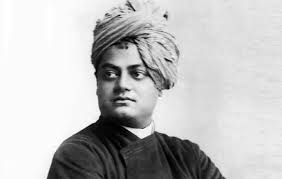
Swami Vivekananda brings in more light on this yoga

He says,

Means are as important as the goal

“One of the greatest lessons I have learnt in my life is to pay as much attention to the means of work as to its end” in one of his lectures delivered at Los Angeles, California in 1900.

Hence, while doing one’s actions, and while performing one’s duties, one should first and foremost concentrate on the immediate job that is in front of a person. It often happens that one tends to ignore the immediate task at hand, by indulging too much in the goal to be attained.

(Extending this thought further, it often happens that we, in a spiritual organization, say, SAI organization, are so much bothered about the goal of our actions as members/ office bearers that in our rush to achieve the goal of some actions, say, related to some program that we are hosting, etc., we miss out one important aspect and what is that aspect???- we miss out on LOVE!!)

Over-indulgence with the idea of attaining the goal will make a person blind towards righteousness or unrighteousness of the means. Such, a person will often end up having results that are quite unfavorable and sometimes opposite of what was intended.

That is why Swami Vivekananda cautions-

“Our great defect in life is that we are so much drawn to the ideal, the goal is so much more enchanting, so much more alluring, so much bigger in our mental horizon, that we lose sight of the details altogether.”

Any action that makes us go Godward is duty.

As means are very vital to reach the goal, it is necessary to understand, what actions can serve to attain liberation. Swami Vivekananda calls these actions “Duty”.

He says-

“Any action that makes us go Godward is a good action and is our duty; any action that makes us go downward is evil and is not our duty. From the subjective standpoint we may see that certain acts tend to exalt and ennoble us, while certain other acts tend to degrade and to brutalize us.”

Therefore, only those actions that constitute duty and lead us to exaltation can be considered as the means to Liberation. These are the duties that Hindu scriptures call “svadharma”. What is right and good for one may not be so for another person. Every person should understand his own inherent nature, his position and stage in life and perform those duties that take him towards Liberation.

Swami Vivekananda himself clarifies this-

“The Bhagavad-Gita frequently alludes to duties dependent upon birth and position in life. Birth and position in life and in society largely determine the mental and moral attitude of individuals towards the various activities of life. It is therefore our duty to do that work which will exalt and ennoble us in accordance with the ideals and activities of the society in which we are born. But it must be particularly remembered that the same ideals and activities do not prevail in all societies and countries”

But this does not mean that people perform any actions according to their fancies and call it dharma. Though svadharma is different for every person, there are universal principles that are common to everyone.

Swami Vivekananda says-

“There is, however, only one idea of duty which has been universally accepted by all mankind, of all ages and sects and countries, and that has been summed up in a Sanskrit aphorism thus: “Do not injure any being; not injuring any being is virtue, injuring any being is sin.” Therefore, people must decide their own svadharma, not on the basis of their fancies but on the basis of these universal principles and how their application will take them towards liberation.”

Swami Vivekananda summarizes this path of Karma-Yoga as-

“Karma-Yoga is the attaining through unselfish work of that freedom which is the goal of all human nature. Every selfish action, therefore, retards our reaching the goal, and every unselfish action takes us towards the goal; that is why the only definition that can be given of morality is this: That which is selfish is immoral, and that which is unselfish is moral.”


Love.