Tuesday, July 2, 2019

Bhagwad Gita - Post 50


Chapter 4 continued...

Verse 22

Yadricchaalaabhasantushto
Dwandwaateeto vimatsarah;
Samah siddhaavasiddhau cha
Kritwaapi na nibadhyate.

Content with what comes to him without effort, free from the pairs of opposites and envy, even minded in success and failure, though acting, he is not bound.

Verse 23

Gatasangasya muktasya
Jnaanaavasthitachetasah;
Yajnaayaacharatah karma
Samagram pravileeyate.

To one who is devoid of attachment, who is liberated, whose mind is established in knowledge, who works for the sake of sacrifice (for the sake of God), the whole action is dissolved.

Verse 24

Brahmaarpanam brahmahavir
Brahmaagnau brahmanaa hutam;
Brahmaiva tena gantavyam Brahmakarmasamaadhinaa.

Brahman is the oblation; Brahman is the melted butter (ghee); by Brahman is the oblation poured into the fire of Brahman; Brahman verily shall be reached by him who always sees Brahman in action.

Verse 25

Daivam evaapare yajnam
Yoginah paryupaasate;
Brahmaagnaavapare yajnam Yajnenaivopajuhwati.

Some Yogis perform sacrifice to the gods alone, while others (who have realized the Self) offer the Self as sacrifice by the Self in the fire of Brahman alone.

Verse 26

Shrotraadeeneendriyaanyanye
Samyamaagnishu juhwati;
Shabdaadeen vishayaananya
Indriyaagnishu juhwati.

Some again offer hearing and other senses as sacrifice in the fire of restraint; others offer sound and various objects of the senses as sacrifice in the fire of the senses.

Verse 27

Sarvaaneendriya karmaani
Praanakarmaani chaapare;
Aatmasamyamayogaagnau
Juhwati jnaanadeepite.

Others again sacrifice all the functions of the senses and those of the breath (vital energy or Prana) in the fire of the Yoga of self-restraint kindled by knowledge.

Verse 28

Dravyayajnaas tapoyajnaa
Yogayajnaastathaapare;
Swaadhyaayajnaana yajnaashcha
Yatayah samshitavrataah.

Some again offer wealth, austerity and Yoga as sacrifice, while the ascetics of self-restraint and rigid vows offer study of scriptures and knowledge as sacrifice.

Verse 29

Apaane juhwati praanam
Praane’paanam tathaa’pare;
Praanaapaana gatee ruddhwaa Praanaayaamaparaayanaah.

Others offer as sacrifice the outgoing breath in the incoming, and the incoming in the outgoing, restraining the courses of the outgoing and the incoming breaths, solely absorbed in the restraint of the breath.

Verse 30

Apare niyataahaaraah
Praanaan praaneshu juhwati;
Sarve’pyete yajnavido
Yajnakshapita kalmashaah.

Others who regulate their diet offer life-breaths in life-breaths; all these are knowers of sacrifice, whose sins are all destroyed by sacrifice.

Verse 31

Yajnashishtaamritabhujo yaanti
Brahma sanaatanam;
Naayam loko’styayajnasya
Kuto’nyah kurusattama.

Those who eat the remnants of the sacrifice, which are like nectar, go to the eternal Brahman. This world is not for the man who does not perform sacrifice; how then can he have the other, O Arjuna?

Continued...

Love.


Monday, July 1, 2019

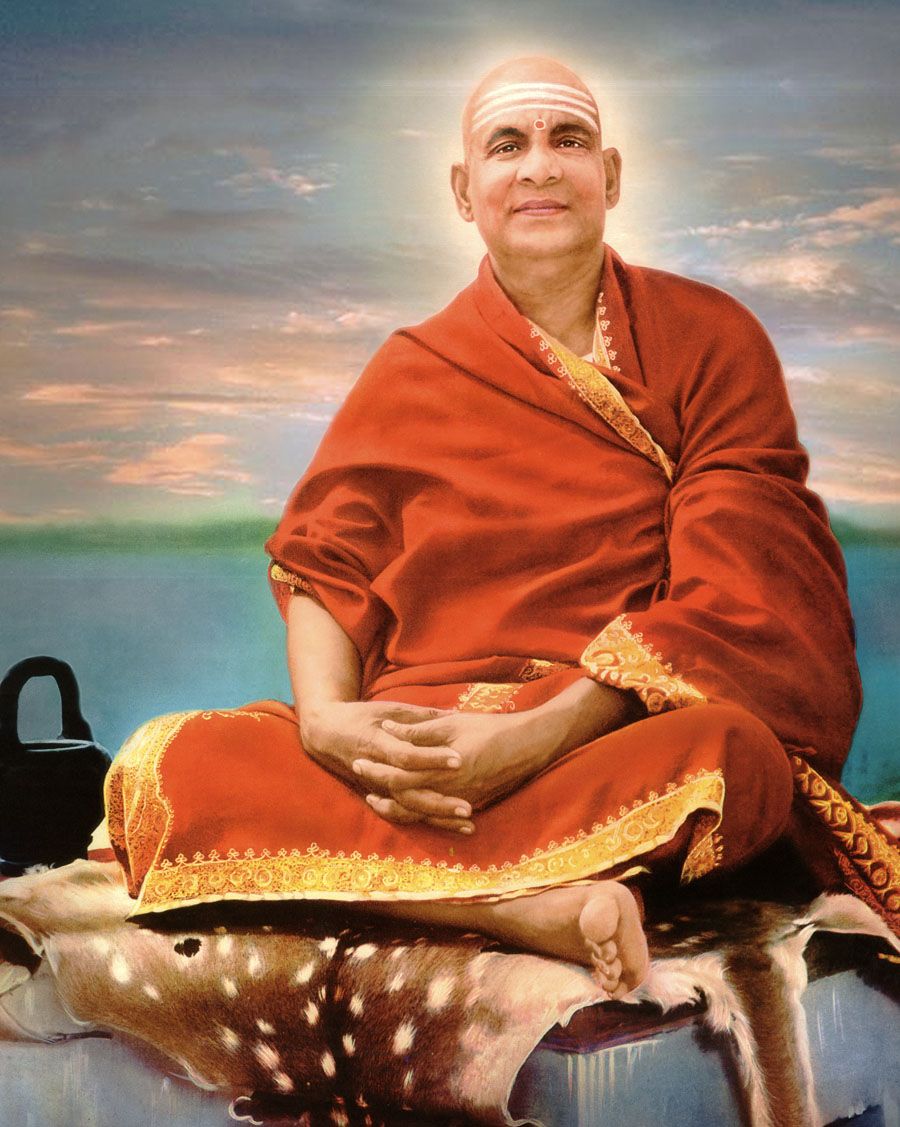
Swami Sivananda


Sri Sankara writes: "He who sees inaction in action, i.e., he who has the right knowledge that action, which is commonly supposed by all to pertain to the Self, does not really belong to the Self, just as motion does not really pertain to the trees (on the shore of the river) which appear (to a man on board the ship) to move in the opposite direction, and who sees action in inaction, i.e., he who knows that even inaction is action, for, inaction is but a cessation of bodily and mental activities, and like action it is falsely attributed to the Self and causes the feeling of egoism as expressed in the words "quiet and doing nothing, I sit happy" - he who can realize the nature of action and inaction as now explained is wise among men: "He is a devout Yogin, he is the performer of actions, he is released from evil and has achieved all."

 - Swami Sivananda

Sunday, June 30, 2019

Bhagwad Gita - Post 49


Chapter 4 continued...

Verse 12

Kaangkshantah karmanaam
Siddhim yajanta iha devataah;
Kshipram hi maanushe loke
Siddhir bhavati karmajaa.

Those who long for success in action in this world sacrifice to the gods, because success is quickly attained by men through action.

Verse 13

Chaaturvarnyam mayaa srishtam
Gunakarma vibhaagashah;
Tasya kartaaram api maam
Viddhyakartaaram avyayam.

The fourfold caste has been created by Me according to the differentiation of Guna and Karma; though I am the author thereof, know Me as the non-doer and immutable.

Verse 14

Na maam karmaani limpanti
Na me karmaphale sprihaa;
Iti maam yo’bhijaanaati
Karmabhir na sa badhyate.

Actions do not taint Me, nor have I a desire for the fruits of actions. He who knows Me thus is not bound by actions.

Verse 15

Evam jnaatwaa kritam karma
Poorvair api mumukshubhih;
Kuru karmaiva tasmaat twam
Poorvaih poorvataram kritam.

Having known this, the ancient seekers after freedom also performed actions; therefore, do thou perform actions as did the ancients in days of yore.

Verse 16

Kim karma kim akarmeti
Kavayo’pyatra mohitaah;
Tat te karma pravakshyaami
Yajjnaatwaa mokshyase’shubhaat.

What is action? What is inaction? As to this even the wise are confused. Therefore, I shall teach thee such action (the nature of action and inaction), by knowing which thou shalt be liberated from the evil (of Samsara, the world of birth and death).

Verse 17

Karmano hyapi boddhavyam
Boddhavyam cha vikarmanah;
Akarmanashcha boddhavyam
Gahanaa karmano gatih.

For, verily the true nature of action (enjoined by the scriptures) should be known, also (that) of forbidden (or unlawful) action, and of inaction; hard to understand is the nature (path) of action.

Verse 18

Karmanyakarma yah pashyed
Akarmani cha karma yah;
Sa buddhimaan manushyeshu
Sa yuktah kritsnakarmakrit.

He who seeth inaction in action and action in inaction, he is wise among men; he is a Yogi and performer of all actions.

Verse 19

Yasya sarve samaarambhaah
Kaamasankalpa varjitaah;
Jnaanaagni dagdhakarmaanam
Tam aahuh panditam budhaah.

He whose undertakings are all devoid of desires and (selfish) purposes, and whose actions have been burnt by the fire of knowledge — him the wise call a sage.

Verse 20

Tyaktwaa karmaphalaasangam
Nityatripto niraashrayah;
Karmanyabhipravritto’pi naiva
Kinchit karoti sah.

Having abandoned attachment to the fruit of the action, ever content, depending on nothing, he does not do anything though engaged in activity.

Verse 21

Niraasheer yatachittaatmaa 
Tyaktasarvaparigrahah;
Shaareeram kevalam karma
Kurvannaapnoti kilbisham.

Without hope and with the mind and the self-controlled, having abandoned all greed, doing mere bodily action, he incurs no sin.

Continued...

Love.