Thursday, July 4, 2019

Bhagwad Gita - Post 51


Chapter 4 continued...

Verse 32

Evam bahuvidhaa yajnaa
Vitataa brahmano mukhe;
Karmajaan viddhi taan sarvaan
Evam jnaatwaa vimokshyase.

Thus, various kinds of sacrifices are spread out before Brahman (literally at the mouth or face of Brahman). Know them all as born of action, and knowing thus, thou shalt be liberated.

Verse 33

Shreyaan dravyamayaadyajnaaj
Jnaanayajnah parantapa;
Sarvam karmaakhilam paartha
Jnaane parisamaapyate.

Superior is wisdom-sacrifice to sacrifice with objects, O Parantapa! All actions in their entirety, O Arjuna, culminate in knowledge!

Verse 34

Tadviddhi pranipaatena
Pariprashnena sevayaa;
Upadekshyanti te jnaanam
Jnaaninas tattwadarshinah.

Know that by long prostration, by question and by service, the wise who have realized the Truth will instruct thee in (that) knowledge.

Verse 35

Yajjnaatwaa na punarmoham
Evam yaasyasi paandava;
Yena bhootaanyasheshena Drakshyasyaatmanyatho mayi.

Knowing that, thou shalt not, O Arjuna, again become deluded like this; and by that thou shalt see all beings in thy Self and also in Me!

Verse 36

Api chedasi paapebhyah
Sarvebhyah paapakrittamah;
Sarvam jnaanaplavenaiva
Vrijinam santarishyasi.

Even if thou art the most sinful of all sinners, yet thou shalt verily cross all sins by the raft of knowledge.

Verse 37

Yathaidhaamsi samiddho’gnir
Bhasmasaat kurute’rjuna;
Jnaanaagnih sarvakarmaani
Bhasmasaat kurute tathaa.

As the blazing fire reduces fuel to ashes, O Arjuna, so does the fire of knowledge reduce all actions to ashes!

Verse 38

Na hi jnaanena sadrisham
Pavitram iha vidyate;
Tat swayam yogasamsiddhah
Kaalenaatmani vindati.

Verily there is no purifier in this world like knowledge. He who is perfected in Yoga finds it in the Self in time.

Verse 39

Shraddhaavaan labhate jnaanam
Tatparah samyatendriyah;
Jnaanam labdhvaa paraam
Shaantim achirenaadhigacchati.

The man who is full of faith, who is devoted to it, and who has subdued all the senses, obtains (this) knowledge; and, having obtained the knowledge, he goes at once to the supreme peace.

Verse 40

Ajnashchaashraddhadhaanashcha Samshayaatmaa vinashyati;
Naayam loko’sti na paro
Na sukham samshayaatmanah.

The ignorant, the faithless, the doubting self-proceeds to destruction; there is neither this world nor the other nor happiness for the doubting.

Verse 41

Yogasannyasta karmaanam Jnaanasamcchinnasamshayam;
Aatmavantam na karmaani
Nibadhnanti dhananjaya.

He who has renounced actions by Yoga, whose doubts are rent asunder by knowledge, and who is self-possessed — actions do not bind him, O Arjuna!

Verse 42

Tasmaad ajnaanasambhootam
Hritstham jnaanaasinaatmanah;
Cchittwainam samshayam yogam Aatishthottishtha bhaarata.

Therefore, with the sword of knowledge (of the Self) cut asunder the doubt of the self-born of ignorance, residing in thy heart, and take refuge in Yoga; arise, O Arjuna!

Iti Srimad Bhagavadgeetaasoopanishatsu Brahmavidyaayaam
Yogashaastre Sri Krishnaarjunasamvaade
Jnaanavibhaagayogo Naama Chaturtho’dhyaayah

Thus, in the Upanishads of the glorious Bhagavad Gita, the science of the Eternal, the scripture of Yoga, the dialogue between Sri Krishna and Arjuna, ends the fourth discourse.

Love.


Tuesday, July 2, 2019

Bhagwad Gita - Post 50


Chapter 4 continued...

Verse 22

Yadricchaalaabhasantushto
Dwandwaateeto vimatsarah;
Samah siddhaavasiddhau cha
Kritwaapi na nibadhyate.

Content with what comes to him without effort, free from the pairs of opposites and envy, even minded in success and failure, though acting, he is not bound.

Verse 23

Gatasangasya muktasya
Jnaanaavasthitachetasah;
Yajnaayaacharatah karma
Samagram pravileeyate.

To one who is devoid of attachment, who is liberated, whose mind is established in knowledge, who works for the sake of sacrifice (for the sake of God), the whole action is dissolved.

Verse 24

Brahmaarpanam brahmahavir
Brahmaagnau brahmanaa hutam;
Brahmaiva tena gantavyam Brahmakarmasamaadhinaa.

Brahman is the oblation; Brahman is the melted butter (ghee); by Brahman is the oblation poured into the fire of Brahman; Brahman verily shall be reached by him who always sees Brahman in action.

Verse 25

Daivam evaapare yajnam
Yoginah paryupaasate;
Brahmaagnaavapare yajnam Yajnenaivopajuhwati.

Some Yogis perform sacrifice to the gods alone, while others (who have realized the Self) offer the Self as sacrifice by the Self in the fire of Brahman alone.

Verse 26

Shrotraadeeneendriyaanyanye
Samyamaagnishu juhwati;
Shabdaadeen vishayaananya
Indriyaagnishu juhwati.

Some again offer hearing and other senses as sacrifice in the fire of restraint; others offer sound and various objects of the senses as sacrifice in the fire of the senses.

Verse 27

Sarvaaneendriya karmaani
Praanakarmaani chaapare;
Aatmasamyamayogaagnau
Juhwati jnaanadeepite.

Others again sacrifice all the functions of the senses and those of the breath (vital energy or Prana) in the fire of the Yoga of self-restraint kindled by knowledge.

Verse 28

Dravyayajnaas tapoyajnaa
Yogayajnaastathaapare;
Swaadhyaayajnaana yajnaashcha
Yatayah samshitavrataah.

Some again offer wealth, austerity and Yoga as sacrifice, while the ascetics of self-restraint and rigid vows offer study of scriptures and knowledge as sacrifice.

Verse 29

Apaane juhwati praanam
Praane’paanam tathaa’pare;
Praanaapaana gatee ruddhwaa Praanaayaamaparaayanaah.

Others offer as sacrifice the outgoing breath in the incoming, and the incoming in the outgoing, restraining the courses of the outgoing and the incoming breaths, solely absorbed in the restraint of the breath.

Verse 30

Apare niyataahaaraah
Praanaan praaneshu juhwati;
Sarve’pyete yajnavido
Yajnakshapita kalmashaah.

Others who regulate their diet offer life-breaths in life-breaths; all these are knowers of sacrifice, whose sins are all destroyed by sacrifice.

Verse 31

Yajnashishtaamritabhujo yaanti
Brahma sanaatanam;
Naayam loko’styayajnasya
Kuto’nyah kurusattama.

Those who eat the remnants of the sacrifice, which are like nectar, go to the eternal Brahman. This world is not for the man who does not perform sacrifice; how then can he have the other, O Arjuna?

Continued...

Love.


Monday, July 1, 2019

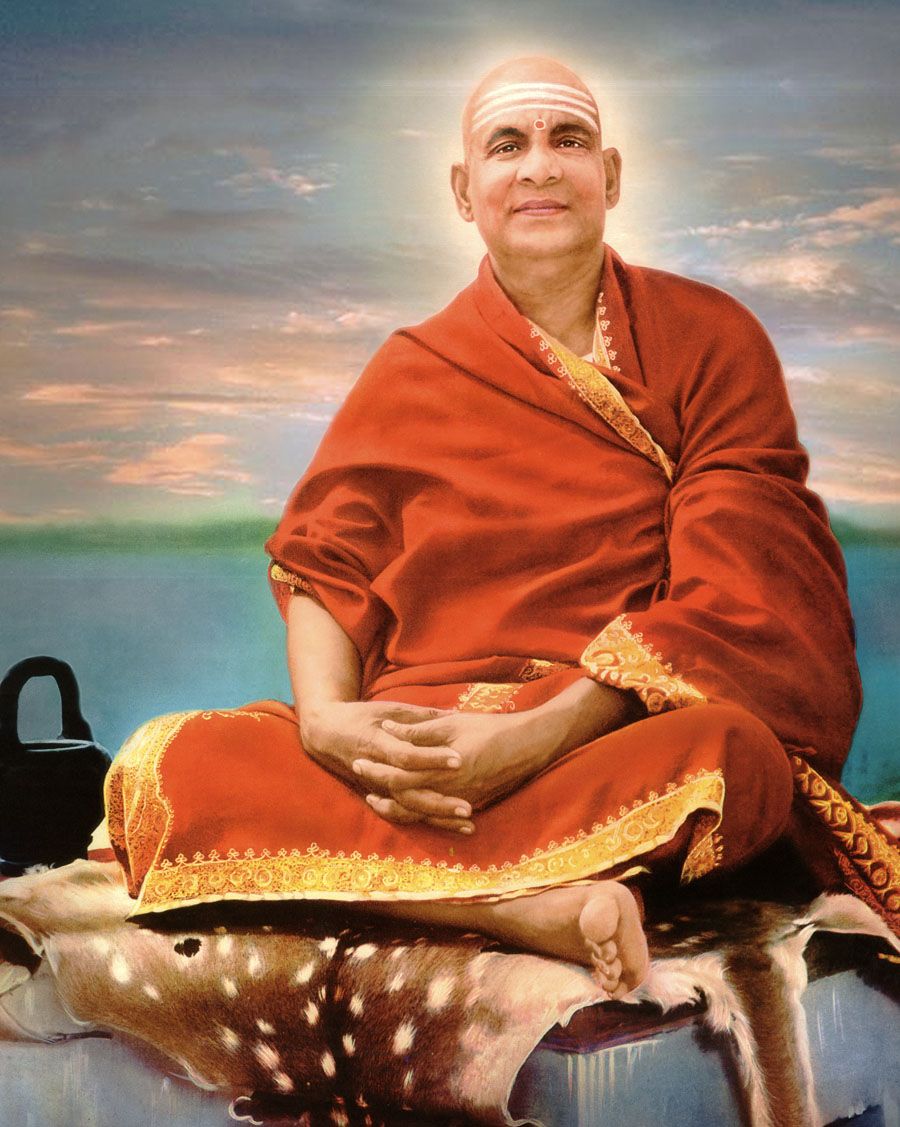
Swami Sivananda


Sri Sankara writes: "He who sees inaction in action, i.e., he who has the right knowledge that action, which is commonly supposed by all to pertain to the Self, does not really belong to the Self, just as motion does not really pertain to the trees (on the shore of the river) which appear (to a man on board the ship) to move in the opposite direction, and who sees action in inaction, i.e., he who knows that even inaction is action, for, inaction is but a cessation of bodily and mental activities, and like action it is falsely attributed to the Self and causes the feeling of egoism as expressed in the words "quiet and doing nothing, I sit happy" - he who can realize the nature of action and inaction as now explained is wise among men: "He is a devout Yogin, he is the performer of actions, he is released from evil and has achieved all."

 - Swami Sivananda