Saturday, November 20, 2021

Sathya Sai Vahini - Post 1

Introduction to Sathya Sai Vahini by late Prof. N. Kasturi 


This must be said of this book: It is the authentic Voice of the Divine Phenomenon, that is setting right the moral codes and behaviour of millions of men and women today. And, so, it merits careful and devoted study.

The Lord has declared that when ethical standards fall and man forgets or ignores His glorious destiny, He will Himself come down among men and guide humanity along the straight and sacred path. 

The Lord has come; He is guiding those who accept the guidance; He is calling on all who have strayed away to retrace their steps. Baba’s love and wisdom know no bounds, His grace knows no obstacle. He is no hard taskmaster; His solicitude for our welfare and real progress is overwhelming.

Bhagavan has announced Himself as the Divine Teacher of Truth, Beauty, and Goodness. By precept and example, through His writings and discourses, letters and conversations, He has been instilling the supreme wisdom and instructing all mankind to translate it into righteous living, inner peace, and universal love. 

When the Ramakatha Rasa Vahini, the uniquely authentic nectarine stream of the Rama story, was serialized in full in the Sanathana Sarathi, Bhagavan blessed readers with a new series, which He named Bharathiya Paramartha Vahini (Stream of Indian Spiritual Values). 

While these precious essays on the basic truths that fostered and fed Indian culture for ages before history began were being published, Bhagavan decided to continue the flow of illumination and instruction under a more comprehensive name, Sathya Sai Vahini —“The Stream of Divine Grace”, the Ganga from the Lotus Feet of the Lord. 

This book contains the two Vahinis merged in a master stream. Inaugurating these series, Bhagavan wrote for publication in the Sanathana Sarathi, “Moved by the urge to cool the heat of conflict and to quench the agonizing thirst for ‘knowledge about yourself’ with which you are afflicted, see, here it comes, the Sathya Sai Vahini, wave after wave, with the Sanathana Sarathi as the medium between you and me.” 

With infinite compassion, this Sathya Sai incarnation of the Omniwill is freeing millions of people in all lands from disease, distress, despair, narcotics, narcissism, and nihilism. He is encouraging those who suffer gloom through wilful blindness to light the lamp of love to see the world and the lamp of wisdom to see themselves. 

“This is a tantalizing true-false world; its apparent diversity is an illusion; it is ONE, but it is cognized by the maimed multiple vision of humans as Many”, says Bhagavan. This book is the twin lamp He has devised for us.

Lord Krishna aroused Arjuna from the gloomy depression into which he led his mind, at the very moment when duty called on Arjuna to be himself —the famed warrior, ready and eager to fight on behalf of right against might. Krishna effected the cure by reminding him of the Atma that was his reality and of Himself being the Atma that he was. 

Bhagavan says that we too are easily prone to get caught “in the coils of cleverness and the meshes of dialectical logic. The key to success in spiritual endeavour (and what is life worth, if it is not dedicated to that high endeavor?) is philosophical inquiry and moral advance, both culminating in the awareness of the Atma, the source and sum of all the energy and activity that is.” 

We are all motivated by fear, doubt, and attachments, just as Arjuna was. We are all hesitant at the crossroad between this and That, the wave and the ocean. But, created by Him, we are “the miracle of miracles”. Bhagavan says, “What is not in man cannot be anywhere outside him. What is visible outside him is but a rough reflection of what really is in him.” 

“The Atma is free. It is purity. It is fullness. It is unbounded. Its center is the body but its circumference is beyond the beyond.”

Man has been endowed with a super intellect, which can recognize the existence of the Atma, strive to bring it into his awareness, and succeed.

However, very few are human enough to seek to know who they are, why they are here, wherefrom, and where they go from here. They move about with temporary names, encased in evanescent ever-changing bodies.

So, Bhagavan accosts us, “Listen! Children of Immortality! Listen! Listen to the message of the sages who had the vision of the most majestic Person, the Purushothama, the Foremost and the First, who dwells beyond the realms of illusion and elusion. 

O ye human beings! You are by nature ever full. You are indeed God moving on earth. Is there a greater sin than calling you ‘sinners’? When you accept this appellation, you defame yourselves.

Arise! Cast off the humiliating feeling that you are sheep. Do not be deluded into that idea. You are Atma. You are drops of nectar, immortal truth, beauty, goodness. You have neither beginning nor end. All things material are your bondslaves; you are not bondslaves, as you imagine now.”

Bhagavan says, “Through the unremitting practice of truth, righteousness, and fortitude, the Divinity quiescent in the individual has to be induced to manifest itself in daily living, transforming it into the joy of truly loving.” 

“Know the Supreme Reality; breathe It, bathe in It, live in It. Then It becomes all of you and you become fully It.” 

A material object is not self-expressive. It depends wholly on the capacity for knowledge (chith-sakthi) of the individual Atma for its manifestation (prakasa). The relative world of objects is dependent upon the relative consciousness of the individual Atma (jivi). 

When the object is further scrutinized and the true basis of the Plurality is grasped, Brahman or the Oversoul as the first Principle is acknowledged as a logical necessity. 

Subsequently, when sense control, mind cleansing, concentration, and inner silence are achieved, what appeared as a logical necessity dawns upon the purified consciousness as a Positive Permanent Impersonal Will (Prajnanam Brahma),whose expression is all this.

Sathya Sai Vahini reveals to us in unmistakable terms that the self in man is “no other than the Overself, or God”. We are told that this is true not only of mankind but of all beings. Everywhere and anywhere! 

In fact, “Will causes this unreal multiplicity of Cosmos on the One that He is. He can, by the same Will, end the phenomenon.”

“Being (God) is behind becoming, and becoming merges in being. This is the eternal play.” says Bhagavan.

As Bhagavan writes, “the supreme end of education, the highest purpose of instruction, is to help us to become aware of the universal immanent Impersonal.” 

Sathya Sai Baba, in His role as the Teacher of Teachers, is instructing us herein for this supreme adventure of the soul. Seekers on this pilgrimage have in Him a compassionate guide and guardian, for He is the embodiment of the very Will that planned the Play.

As we are led through the valley of this Vahini by Bhagavan, holding us by the hand, He exhorts us to admire, appreciate, and adore the seers and sages of many lands who pioneered this realm and laid limits, bounds, preparatory disciplines, and practices to smooth the path and hasten the discovery of truth. 
He writes of the Vedas and later spiritual texts, of the forms of worship that have stood the test of centuries of loyal acceptance, and of disciplinary codes for the four stages of human life and for humans with pronounced inborn characteristics —the vertically uplifting pure (sathwic), the horizontal expansive emotional (rajasic), and the declining dull (thamasic).

He clarifies the role of karma (action) and its consequence. “Like a frail ship caught in a stormy sea, man climbs up a gigantic wave and reaches its froth-edged peak. 

The next moment, he is hurled into the trough, only to rise again. The rise and fall are both consequences of his own deeds. They design the palace and the prison for man.

Grief and joy is the resound, the reflection or reaction of one’s own actions. The individual soul (jivi) can escape both by cultivating the attitude of a witness, not involved in the activities it has to do.” 

Bhagavan writes of yoga as the process of “coming together of the individual soul (jivatma) and the Highest Atma (Paramatma), the Self and the Overself”. 

He elaborates on the path of love (devotion, bhakthi), of selfless activity (karma), of mastery over the mind, of sublimation of consciousness (wisdom, jnana). 

Bhagavan analyses the rights and responsibilities of the individual and society and reveals to us that they have the one underlying purpose of spiritual fulfilment.

To sum up, Sathya Sai Vahini is the Gita given to us by the Person who, as the eternal charioteer (Sanathana Sarathi), is eager and ready to hold the reins of our senses, mind, consciouness, ego, and intellect and to guide us safely to the Abode of Supreme Peace (Prasanthi Nilayam), the goal of all mankind.

May we all be blessed by His love and grace.

N. Kasturi.


Love.


Tuesday, November 16, 2021

Dakshinamurthy Stotram - Post 32 - Concluding post

We now come to the last 2 lines of verse 10 which say, 

The Benefits gained are:

     i.            one attains the glorious state of Self-hood; 

  ii.            along with it, he gains all the divine glories. 

iii.            he gains the world of Eswara Himself;

iv.            he regains his state of perfection.

   v.            he manifests the eight-fold supernatural     powers.

vi.            he gains all divine opulence without any obstruction.

The Six Phalas of Realization

i) Sarva-Atmatwam“Self-hood”; this is the highest attainment of Self-realization or God-realization. It is earned by the Vedantic Sadhaka who has practised Sravana, Manana, and Nididhyasana to the point of perfecting them. 

He attains the highest State, namely complete union with the non-dual Brahman. This is the pinnacle of spiritual attainment. He truly sees the Self in all beings. To him it is not just a practice anymore, but an actuality in day-to-day life.

ii) Vibhooti: “Divine glories”. There are 71 Vibhootis of the Lord described in the Bhagavad Geeta, in Chapter 10. It is also mentioned that there are an infinite number of manifested Vibhootis, and that Sri Krishna as an Avatara is the foremost Vibhooti. In the same vein, the God-realised saint is also one of the very special Vibhootis.

iii) Eswaratvam: “Ishwara-hood”; this is earned by the devout Upasaka who does the worship of the Lord with no selfish desires, but merely to please the Lord. He attains great purity, and goes to the region of Brahmaji (Ishwara), which is termed Brahmaloka.

iv) Siddhi: “state of perfection”. If one serves an artist, he will more than likely get the talent of the artist as his Phala

In the same way, if one serves some Deity, all of whom come under the rule of Eswara, the Creator, then he will get what that Deity represents. If he worships Eswara Himself, then he will receive “Eswara-hood”. And if he devotes himself to the contemplation of Brahman he will get the fruit of Non-duality or Oneness.

As far as the Brahma Jnani is concerned, having attained the highest that is to be attained, all other fruits come to him without his asking. 

Parinatam: This means “manifested”, which implies that these Siddhis are in the realm of Maya. They do not belong to Brahman. They are part of the Unreal. 

Hence, Jnanis give them little importance; in fact, they are positively a nuisance factor to them as it attracts the “flies” of curiosity-mongers to them.

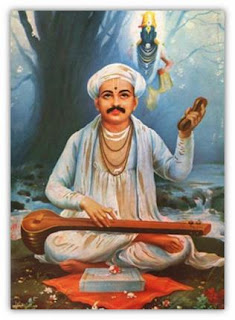
Sant Tukaram  was approached by the personification of these Siddhis and asked if they could do him any service. They were willing to do his bidding. He said to them, “Go back to Vaikuntha, and don’t ever come back!”

Sometimes, however, the Siddhis are used by saints to alleviate the sufferings of people. There are Siddhis by which certain cures can be performed. Saints may use powers such as foretelling an event for protecting a devotee who is likely to face physical danger, if it helps the person to develop faith in God. 

But on no account will he publicize these Siddhis for the sake of popularity. Also, the siddhis come to them for a particular purpose and they use them as instrument of Lord and give no importance to the same once the purpose is fulfilled.

v) Ashtadhaa: “the eight supernatural powers”. The eight supernatural powers are:

     i.            Anima: the power to assume a very small form.

  ii.            Mahima: the power to become very large, to pervade everything.

iii.            Garima: the power to make oneself very heavy.

iv.            Laghima: the power to become very light like a feather.

   v.            Praapti: the power to attain whatever one desires.

vi.            Prakamya: the ability to go anywhere in the three worlds.

vii.            Ishitvam: the power to rule over all the three worlds.

viii.            Vashitvam: the power to control others, to make them follow your lead.

Siddhis may be earned by the Karma-Upasaka who performs various rites and rituals with a desire-motive. He attains various heavenly worlds where he can enjoy his wishes.

vi)Aishwarya: “divine opulence or excellence”. Traditionally, this is one of the six virtues possessed by ‘Bhagavan’. The other five are Veerya, Yashas, Shree, Jnana and Vairagya – i.e. valour, fame, prosperity, knowledge and dispassion.

Benefit of phala shruti

Suppose, I am a very worldly person and I pick up this Dakshinamurti Stotra. I read through all Dakshinamurti is this and that, and I am thinking what all this means to me, this is all boring. Then I get to this last part that talk about Ashta Siddhi. This seems interesting to me. I didnt get all of the Dakshinamurti stuff, but I like the powers. 

The text however says that this power is a result of studying this hymn. So that leads me to go back to the beginning and see what this text is really about.

So, at the very end of the hymn phala shruti says, if you study this Dakshinamurti Stotra you will get these eight powers. 

Suppose you start studying the stotra and you study it properly with a teacher and through your efforts of sravana, manana, nidhidhyasana, after a long period of time, you may discover that you don’t have these eight powers; but you have something infinitely more valuable that is Sarva-Atmatwam: “Self-hood”. 

Phala shruti uses a worldly approach to draw you in, but then the very content of the hymn will redirect you to a higher goal.

With this, we come to the end of this sacred Hymn- Dakshinamurthy Ashtakam or Dakshinamurthy Stotram.

Hari Aum Tatsat


Love.


Friday, November 12, 2021

Dakshinamurthy Stotram - Post 31

All this is Atman” – this knowledge has just been explained in this Ashtakam. It follows from it that:

v   By hearing this knowledge,

v   By reflecting upon it,

v   by meditating on it, and

v   By reciting it regularly; 

Four steps of Vedantic Sadhana are mentioned in this Pada.

i)

Sravana

this step removes “I do not know”, i.e. our Abhavana or ignorance.

ii)

Manana

this step removes “I do not understand”, i.e. Asambhavana or doubts.

iii)

Nididhyasana

this step removes “I do not experience”, i.e. our Viparita Bhavana or the past tendencies which cloud our vision of the Self.

iv)

Sankeertana

this step removes the “I” itself, by glorification of the Lord.

In this manner the barrier between us and the Lord is systematically broken down through practicing these four primary Sadhanas of Vedanta. 

To the extent one practises and perfects these Sadhanas, one becomes eligible for the fruit of the Sadhana:

Spiritual practices for Vedantic study

Shravana 

It literally means listening. However, it implies much more than just listening. It means to use these teachings (that you hear) for the sake of discovering the TRUTH of yourself. It means to use these teachings to guide your own process of self-enquiry.

Manana 

Manana means meditation. In general meditation is about putting your mind into a particular state or condition. It is intellectual enquiry for the very specific reason. 

In our mind many doubts arise. Doubts are born of confusion. We need help to deal with those doubts / confusion. Manana is the process of removing those doubts and confusion.

Nididhyaasanaa 

Nididhyaasanaa means contemplation. The purpose of contemplation is to address a gap between what we understood and how we behave. It is the process of seeing the TRUTH over and over again to remove wrong way of thinking. 

It is a process of assimilation, having the spiritual teachings go in deeply, having these teachings penetrate all of our thinking, having these teachings finally become our world view. 

When these teachings become your world view, you see everything as manifestation of Atman. Shravana, Manana and Nididhyaasanaa are absolutely necessary practices in spiritual growth. 

Merely studying this hymn without these spiritual practices might not be useful. In fact all the Vedanta might become useless without, and – just like all the books in a bookshelf sit there unopened are useless. 

You have to use those books to get any benefit out of them. You have to use the teachings of Vedanta to get any benefit out of that. Using them does not mean just reading them. Reading any other book is fine. Reading Vedanta book is not enough. 

Shravana is a process of learning. It has to be followed by manana and nidhidhyasana 

Sankirtana 

It is important to recite the hymn. Sankirtana also means teaching. Some people might learn it thoroughly and would teach others. However, teaching is optional. But reciting for your own spiritual growth is important.

By doing this – Shravana, Manana, Nididhyaasanaa and Sankirtana, what would you get?

Sarvaatmatvam means being the TRUTH of all. It is revealed clearly in this hymn that if you practise, and, you gain

Shravana makes you discover the fact about Sarvaatmatvam.

Manana removes any doubts about Sarvaatmatvam,

Nidhidhyasana allows you to fully assimilate that reality.


Continued..


Love.