Saturday, December 15, 2018

Bhaja Govindam - Post 32


Verse 31


गुरुचरणाम्बुजनिर्भरभक्तः संसारादचिराद्भव मुक्तः ।
सेन्द्रियमानसनियमादेवं द्रक्ष्यसि निजहृदयस्थं देवम् ॥३१॥

Gurucaraāmbuja nirbhara bhakta
sasārādacirādbhava mukta,
sendriyamānasa niyamādeva
drakyasi nija hdayastha devam

O devotee of the lotus feet of the teacher! May you become liberated soon from the sasāra through the discipline of the sense organs and the mind. You will come to experience the Lord that dwells in your own heart.
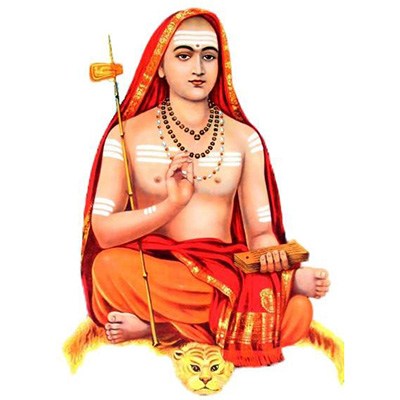
Śakarā wants to tell us of one more thing that we may want to do. Everything else will follow from it.

What is that one most important means?

It is the ardent devotion to the lotus feet of the teacher. He is suggesting that this is an outstanding means for the pursuit of knowledge, for becoming free from sasāra.

Why this devotion to the teacher is emphasized so much?

Devotion to the teacher also includes devotion to what the teacher stands for. One cannot be devoted to a teacher unless he is devoted to what the teacher stands for. 

A teacher represents the scriptures. He represents the tradition, he represents the knowledge. In being devoted to him, there is devotion to the knowledge, devotion to the scriptures, devotion to the tradition, and devotion to God.

Sri Krishna Says in Bhagwad Gita,


udaaraaha sarva evaite jnyaanee
tvaatmaiva me matam |
aasthitaha sa hi yuktaatmaa
maamevaanuttamaam gatim ||

 (All of them are good. But I hold the Jnani as Myself, for, having his soul always united with Me, he is firmly established in Me as the highest goal.) 

Swami explains who is Guru.

“This day is a day set apart for the worship of the Guru. Who is the Guru? How can a person who has not reached the goal guide you towards it? When he is himself groping in the dark, how can he illumine your path? Most Gurus who profess to lead are themselves not quite sure of the road or quite convinced of the rightness of their path. 'Gu' means darkness, or ignorance; "ru" its removal. So the Guru must know the process by which ignorance can be removed in another. How can he do it when he has not done it for himself? The blind cannot lead the blind.”

Guru has another meaning too. 'Gu' means gunaatheetha (beyond the three strands of energy of which the Cosmos is composed) and 'ru' means rupa-rahitha (devoid of any particular form). Now, no mortal has transcended the guna (quality) and rupa (form). God alone can be described as unaffected by these. And, God is the Guru, right in your heart, ready to lead and enlighten. He is all-knowing, all-powerful, and all-pervading.

Sathya Sai Speaks V12:Ch42, Divine Discourse July 1974


Dear All,

If everyone is realized when one is born, then there is no need for any Guru and Sishya in this creation, as all have realized that they are divine.

But this does not happen in reality because due to the karma of past life (lives), we carry our sanskara from previous birth to current birth and these sanskaras influence our habits, our tendencies and our nature.

With our sanskara, our inbuilt EGO, even if best teachings are available in audio / video discourses, we will still be interpreting / misinterpreting or ignoring such words of wisdom due to our own ego, our own nature.

If this is not there, then all scriptural teachings and even qualified / realized master’s teachings are available in internet / amazon!

It is only when we accept some qualified being as our preceptor, our acharya, then, it is very easy for us to keep aside our ego, our own interpretations of the scriptures and offer ourselves wholly to the instructions of our Guru and follow the same accordingly. 

By putting ourselves in the orbit of the Guru’s influence, by devout contemplation on his personality, our minds will gradually attain the same level of the Guru’s purity, Guru’s state, without the limitations in our own individual struggle.

A dry wood, kept near a fire quickly catches the fire and becomes one with it. Similarly, by being nearer and accepting and absorbing the burning renunciation and holiness of the Guru, our heart gets free from the moisture of worldliness.

Devotion means love with respect and reverence. It is a love in which there is reverence and surrender. There are different kinds of love, but the love between a teacher and student is altogether different. There is a willing submission or willing surrender to the teacher out of a sense of reverence, and an implicit trust or faith in him.

We have to take the exposition of a Guru by Sai very clearly in our mind. Swami has said and the quote is there above, that a Guru is beyond Gunas and beyond Form. 

This has to be understood very clearly when we approach a Guru and surrender ourselves to him.

The Guru's form, His appearance, His situation, His environment, His present occupation - all these have to be totally transcended. 

You are not surrendering to a physical Guru. You have surrendered to His realized state. You have surrendered to the scriptural knowledge which the guru has attained as subjective experience. You have surrendered to the one who has merged with God and exists as pure as God.  

Thus, you are bowing to His spiritual state, the knowledge transformed into spiritual experience which is standing before you in a form, as your Guru.

This is important because, if you focus on His form, His environment, then your ego may crop up and raise a doubt in your mind, "O, He is also dressing like anyone else, He is also leading a normal life like anyone else" (especially where your Guru is an householder).

A devotee did not even leave Swami when the devotee spoke to Sathya about Swami and said, “See, Swami also cracks jokes, Swami also talks to Students casually....., so we must also be jovial.....". 

It is here that the author insists that one should not focus only on the outer appearance / normal talks of a Guru but stay focused on his teachings because, in his case, the teachings are not mere scriptural knowledge but they have merged in Him, they have culminated as real experience in Him!!

Continued…..

Love.


Friday, December 14, 2018

Bhaja Govindam - Post 31


Verse 30

प्राणायामं प्रत्याहारं नित्यानित्य विवेकविचारम् । जाप्यसमेतसमाधिविधानं कुर्ववधानं महदवधानम् ॥ ३०॥

Prāāyāma pratyāhāra
nityānitya vivekavicāram,
jāpyasameta samādhividhāna
kurvavadhāna mahadavadhānam

The control of breath, the sense withdrawal, discriminating between the permanent and the impermanent, along with a mind that is absorbed in doing japa, perform these with care, with great care.

Finally, we come to the two verses of encouragement that bring this great text to an end. A good teacher is always the one who ends on an encouraging note. 


Five Important Aspects of Sadhana: 

This verse is a reminder to us to be consistent and ardent in our practice of the following five Sadhanas: 

Controlling All Our Activities: It is activities that bind us and yet it is only activities which are done as worship that can free us. Thus, we are to control all such activities before they start controlling us. 

The first sadhana of controlling activities is explained as “pranayama” or control of breath in the first line of the verse.

In Upadesa Saram, Ramana says, “By the control of Breath, mind becomes still like a bird caught in a net”.

Sense Withdrawal: Sense indulgence has been dealt with in great detail in this text. Here withdrawing them consciously is advised as a Sadhana.

Pranayama only controls the mind, it does not purify it. So long as one holds his breath, mind is restrained. But the suppressed mind jumps to its original mischievous state once the restraint is removed.

Therefore, the aspirant should also learn and perfect the art of self-withdrawal and self-settledness. The art of withdrawing the mind from outer objects is called “pratyahara”.

Discrimination: This brings one to the more serious side of Sadhana. Every thought and word and deed is passed through the intellect for an ‘anti-virus’ scan. 

Both Pranayama and Pratyahara are useless until one is ever vigilant and holds on to the enduring values in life. 

He must be able to distinguish between Ego and Non-Ego, the eternal and the ephemeral.

He should constantly analyze the true nature of things and keep his sense of discrimination always keen and sharp. 

Repetition of Lord’s Name: This is the most effective Sadhana for quick purification of the mind, and cultivating devotion. 

After one learns to discriminate between real and unreal, and strives to cast aside all that belongs to the lower personality, his ego, one should learn to take up japa and continuous remembrance of the Lord.  

Through Japa, he immerses himself in the spiritual vibrations that make him feel the loving presence of the Lord.

Silent Contemplation on the Self: And the ultimate Sadhana of all is to spend time on deep inner reflection or meditation in order to experience the qualities emanating from our Self – peace, purity, wisdom, love and bliss. 

Through all the above process - Pranayama, Pratyahara, Discrimination, Japa, man’s inner purity is strengthened. 

This leads to the final stage where all modifications of the mind cease. In the stillness of silence within, the SELF or the ATMAN shines forth!!

Man is always divine as he is born divine, created by Lord as divine but his divinity is veiled, covered up by his mistaken notion that he is something else than the divine atman.

When in the final gallop in his spiritual sadhana, this veil is lifted, the SELF is realized in its true state.

Love.


Thursday, December 13, 2018

Bhaja Govindam - Post 30


Verse 29

अर्थमनर्थं भावय नित्यं नास्तिततः सुखलेशः सत्यम् ।
पुत्रादपि धनभाजां भीतिः सर्वत्रैषा विहिता रीतिः ॥ २९॥

Arthamanartha bhāvaya nitya
nāstitata sukhaleśa satyam,
putrādapi dhana bhājā bhīti
sarvatraiā vihitā rīti.-

Wealth is calamitous’ thus reflect constantly. The truth is that there is not even an iota of happiness to be got from it. To the rich, there is fear even from one’s own son. This is the way with wealth everywhere.

Artham Anartham: This is a beautiful poetical device used at the very start. Artham is ‘wealth’, and Anartham means ‘the opposite of wealth’ as well as ‘calamitous’. 

Together they serve as a lovely poetic couple to emphasize the calamitous nature of wealth. It buys trouble, disease, worries, sensuality, etc. So, it turns out wealth is in fact a burden rather than what it generally promises to be. 

Man is carried away by the great wind of passion and is driven by his rage for enjoyment. 

As wealth facilitates enjoyment, man’s foremost priority in life becomes accumulation of wealth.

The poor wants more and more security and comforts. 

The rich looks down upon the poor on one hand and on the other hand, they are jealous about those who are richer than them.

At times, wherever there is lots of wealth, there is also intense fear. The fears that beset a wealthy man include that of being cheated by the world, cheated by his own family. This is a fact of life in today’s world. For the wealthy man, death stares at him in the form of his own wealth.

Thus, a wealthy man who used to look down upon the poor as less fortunate ones, starts envying the same poor when he sees that though they struggle for even daily meals, they do not have the fear which is killing this wealthy man.

They do not have to even lock their home, for, there is nothing inside for anyone to steal.

From our own life, we can realize that we, our parents, our grandparents and even we, in our childhood, were more happy when our comforts were less. 

Till the time we saw a TV at our home, the chance of getting addicted to serials and movies in TV was not there and hence, we would be mostly be playing outside our home and were more happier than our children, who, with more comforts, are glued either to TV or to Mobile or to indoor games and play stations.

More the wealth, more is the moral laxity and indulgence in pleasures which ultimately beings nothing but diseases, danger and disaster. 

Only if a man knows to use his extra wealth for others welfare and for the service for the needy, he can really be happy. There is joy only in sharing what we have with others, not in the mere possession of it. To that extent, even our spiritual knowledge, our spiritual experience witnesses more and more joy when we share it with others!!

There is nothing unspiritual about having legitimate personal property for necessary food, clothing and shelter etc. But one should not run after wealth in desperation, leaving spiritual goal totally aside.

A relevant extract from a post in KARMA theme in this blog is reproduced here.

DHARMA, ARTHA, KAMA, MOKSHA- 4 PURUSHARTHAS


ARTHA - Total of material requirement, material need. Its importance is well known, and is known as artha, the material unavoidable.

KAMA - There are other insistent desires called kama, or vital wishes to be fulfilled, which are other pressures exerted by the biological personality, which, too, cannot be ignored, as they are part of oneself.

MOKSHA - Aspiration for attainment of God, which is a fulfillment, finally, of the whole complex of desires, physical as well as vital.

DHARMA - It is an ultimate law that keeps the universe in balance, keeps the body, the mind, your reasoning, society and everything in a state of perfect integration so that you feel that you are existing as a total individual and do not feel that you are a mix-up of several parts heaped together in a confused manner.

For DHARMA and MOKSHA, a man should always constantly do Purushartha (efforts) and should never leave it to Prarabdha.

For ARTHA and KAMA he should totally leave them to Prarabdha as he is going to get only that much of wealth (ARTHA) and enjoyment (KAMA) which is destined in his Prarabdha (luck, fate, fortune) and nothing more in spite of all his Purushartha (efforts).

But unfortunately due to the ignorance of this law of Karma he goes in the wrong direction and ultimately he has to lose everything at the end of his life. Instead of making any Purushartha (efforts) for (1) Dharma and (4) Moksha, he totally neglects it or leaves it to Praradbha only. 

While for (2) Artha (wealth) and (3) Kama (enjoyment), he strives all his nerves and makes strenuous efforts (Purushartha) all throughout his life day and night and crazily hankers after them even when he is not going to get anything more than that is destined in his Prarabdha. Thus he fails in both the ways in life by making efforts in opposite and wrong directions.

Human body is given to acquire all these four: (1) Dharma, (2) Artha, (3) Kama and (4) Moksha, in proper sequence.

Dharma is given number 1 (one) in the sequence and wealth comes second. Wealth (ARTHA) earned through the medium of Dharma (ethics and pious deeds) will lead you to worship and wisdom. While the wealth earned by unethical means and sins through crooked ways would lead you to wine and women.

With the wealth acquired through the medium of Dharma he is permitted to enjoy all the amenities of life and satisfy his KAMA, of course, within the limits of Dharma.

Ultimately when he will realize the fruitlessness of enjoyment for sense gratification, which is insatiable, immediately he will realize the fruitfulness of Moksha.

Consequently and subsequently he will renounce and will turn his face for self-realization and liberation from the cycle of birth and death i.e. MOKSHA which is the final target, the ultimate goal and also the main purpose for which he is gracefully given the human body by God.

Love.